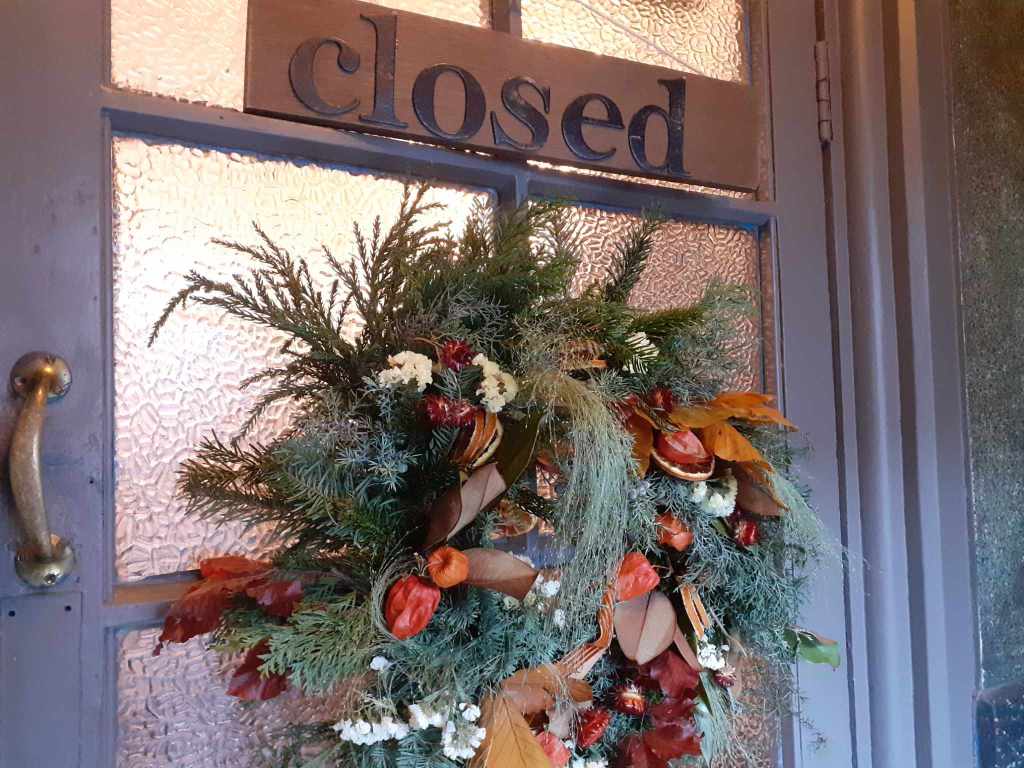
“Why aren’t you open over Christmas?” The words vary but the intention is always the same. The conversation is a pointless one, like two players in a well rehearsed scene. I will say that it’s so that we get to spend time with our families after a busy December and they take their cue to return empty platitudes about that seeming fair. In all my years of having this conversation I’ve never once met someone with the ability to deliver this particular line convincingly. The problem is that they don’t believe it, no matter how much they know it’s the “right” thing to say, through the forced smile and nodding head lingers an expectation of servility from me that they dare not interrogate.
A pub is a tapestry of unspoken social contracts, weaving a mass illusion as beautiful as it is easily unraveled. Whilst some may refer to the “service industry”, one of the most important contracts subverts that moniker – don’t treat me as the servant because I won’t treat you as the master. As late-stage capitalism drives the population into narrow minded individualism, communities collapse and the loneliness epidemic grows. Now more than ever, people need to believe that the person serving them is their friend. In return, in that same capitalist society that demonises those in low paid work, bartenders need to feel appreciated, like they are more than just, empty husks conditioned only to serve and disregarded otherwise. In this way the relationship between customer and service worker is mutually beneficial. The “Closed for Christmas” conversation is a huge threat to this carefully curated relationship as I find it forces, the customer in particular, to reassess the way they view the people serving them.

Goods and services are more accessible now than they have ever been. In order to meet the unrealistic targets set by infinite growth, businesses have now been forced to increase the availability of their services to ridiculous and unsustainable levels. Pubs and shops are open for longer and on more days of the week than ever before and if you can’t go to them, then they’ll come to you, at the click of a button. All this convenience, built on the backs of service staff and delivery drivers, whose free time dwindles without adequate compensation. A worker’s time spent away from the workplace is just another resource to be depleted, after all, capitalism is a system of exploitation, and as time passes its exploitation only gets more extreme in order to keep pace with the false doctrine of infinite growth. Enough is never enough, and everybody still wants their pound of flesh, unaware that the carcass has already been picked clean.
I am a hypocrite. In one breath I extol the virtues of the pub and the importance of the part they play in community provision, and in the next I bemoan pub goers’ resistance to pubs closing at the time when the most vulnerable of their community may need them the most. At times this somewhat oxymoronic outlook weighs heavily on me. I am not spending Christmas with members of my family this year, and nor do I do so often. If the community provision aspect of my job was so important to me then on Christmas Day I should be working, bringing some much needed cheer to people, on a day when cheer is abundant to most but scarce for many. Yet I have never worked a Christmas Day in my life, because the aspect of pub community provision that is too often overlooked is that the staff are part of the community too, both participating and facilitating. The trials and tribulations of December in hospitality are well versed and by the time it gets to Christmas Day, when it is asked of me, I find that I cannot give that which I no longer have.
I have spent almost my entire working life in an industry and a system where if you don’t carve out time for yourself where you can, it will be carved out of you. In most other industries there is no consideration as to whether you should work Christmas or not, but I expect this to change. As we hurtle towards ever more extreme forms of capitalism, worker rights will continue to be eradicated and more and more people will be expected to give up the last few remaining bastions of free time they have.
There are many people for whom the festive period can be the loneliest of the year. For those without families or with fractured or difficult ones, the sharp societal focus on spending time with loved ones at Christmas, puts their own situation into the starkest of contrasts. We live in a country where both mental health and social services have been cut to the barest of bones, where access to such services is being restricted only to those who have the means to do so, either through paying for private services, or taking time out of work. Those without such means face a future where their mental health and social needs must be met by their community and people in public facing jobs are bearing a heavy social responsibility as a direct result.
There will be tens of thousands of well wishes sent between hospitality staff and regular pub goers this Christmas Day, in both directions, because, like a proper family Christmas, through the drinks,toil, and festive friction, lingers genuine affection. That’s the essence of the struggle we face. The possession of empathy in a system that will not credit you for it, rather use it to exploit you and wring out those last few precious pennies. But that shouldn’t stop us. Empathy is only a weakness in the eyes of the exploiter, for the many it can be a green shoot growing in an otherwise barren patch, if only we can nurture and protect it in its most fragile early stages, it can bloom into a solidarity that will see us through the hardest times, together.


 8-Bits and Bobs
Leave a reply to Michael Deakin Cancel reply